How to address the Principal– Agent challenge by the Enterprise Action & Delegation Architecture ?

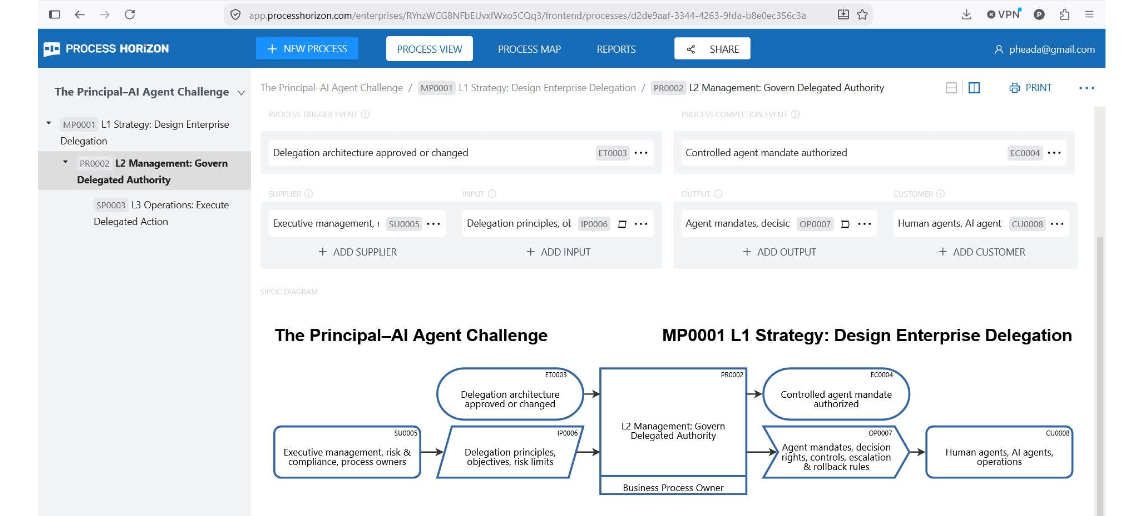
How does management know what its AI agents are doing, why they are doing it, what information they use, what authority they possess, what they produce, who is affected & who remains accountable?
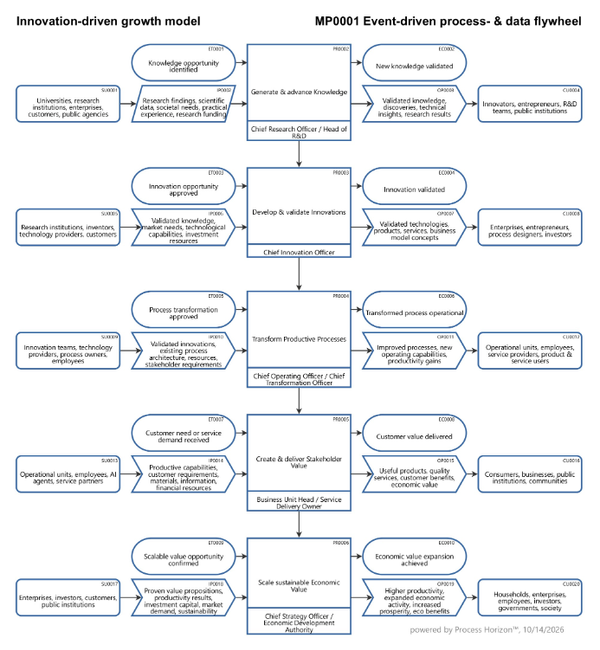
The Enterprise Action & Delegation Architecture makes delegation governable from strategy to action. > Enterprise Principal Architecture: Strategy defines the purpose of delegation
> Agentic Management Architecture: Management defines the mandate
> Agentic Action Architecture: Operations executes the mandate
> Outcomes provide the evidence for accountability
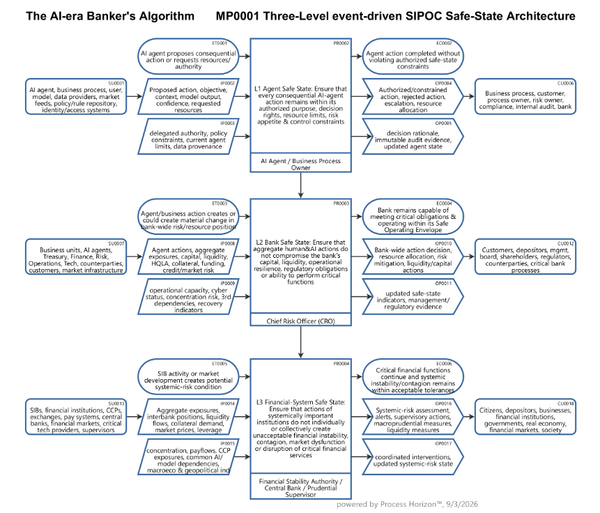
The following three layers (L1 to L3) form one delegation chain:
L1 Strategy: Design Enterprise Delegation
Ensure delegation of Human & AI authority supports enterprise goals, stakeholder interests & risk appetite. What authority should the enterprise delegate, to whom & toward what objective ?
L2 Management: Govern Delegated Authority
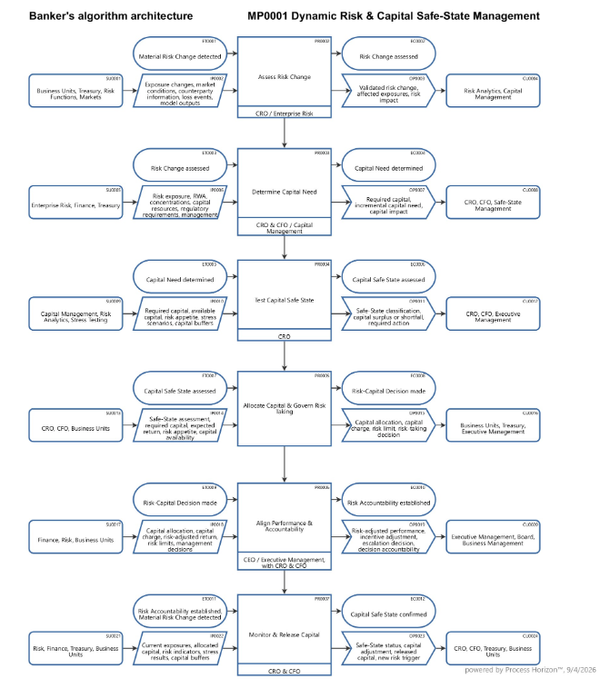
Translate enterprise delegation principles into accountable agent mandates, decision rights and controls. Within what authority & controls may the agent act for the principal ?
L3 Operations: Execute Delegated Action
Ensure each Human or AI agent acts within its mandate & produces a transparent, traceable outcome. Did the agent act as authorized & achieve the intended outcome?
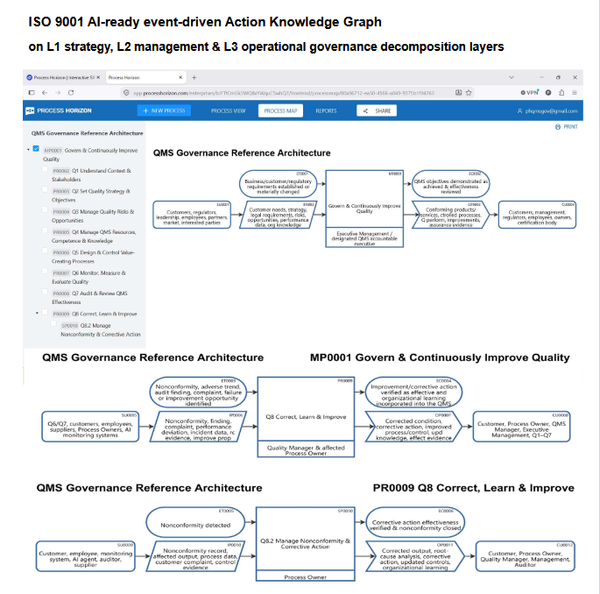
Event-driven SIPOC makes delegated action (Principal-AI Agent challenge) transparent: why an agent acts, on whose authority, with what information, toward what objective & for whose benefit.
Using the following link you can access this sandbox model in the ProcessHorizon web app and adapt it to your needs (easy customizing) and export or print the automagically created visual AllinOne event-driven SIPOC map as a PDF document or share it with your peers: https://app.processhorizon.com/enterprises/iiSNCdUQe4QQjHQUr83QuZox/frontend