e-POWER mobility concept

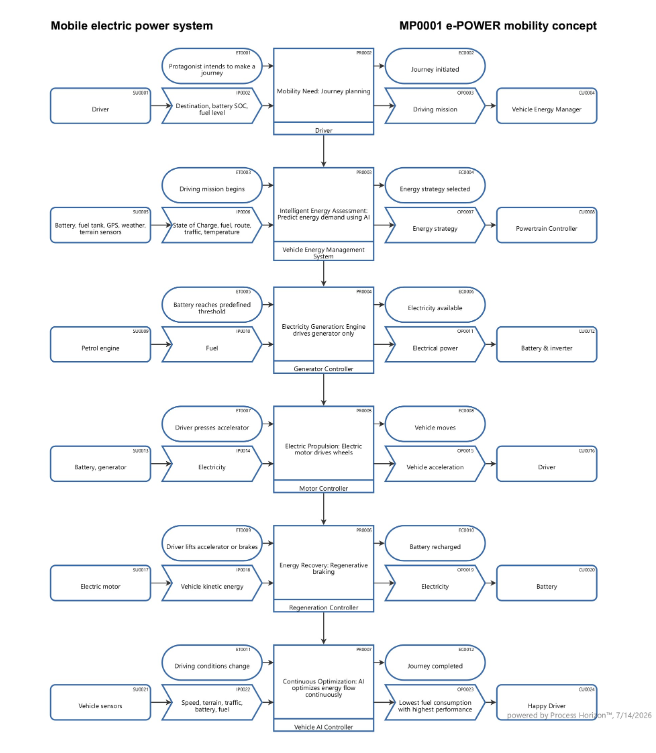
Deliver a genuine electric driving experience without requiring charging infrastructure while maximizing customer convenience, fuel efficiency & CO₂ reduction.
Petrol is no longer the propulsion system, it is simply an onboard electricity generator.
Automobilists no longer need to think about charging cables, charging stations, battery degradation from frequent fast charging, range anxiety.
Instead, they simply drive an electric car whose electricity is generated on demand.
The petrol engine is an onboard power generator for Self-Charging Electric Drive. SCED: Fuel > Electricity > Electric Motor > Wheels
There is no mechanical path from the engine to the wheels. That differentiates e-POWER from conventional hybrids and directly addresses one of the biggest practical barriers for many European buyers: enjoying an electric driving experience without needing access to home charging.
I think an agile compact performance crossover like a Nissan Kicks e-POWER with 230 PS or a VW GT e-Power would have transition potential in Europe.
Enjoy the electric driving sensation of e-Power.
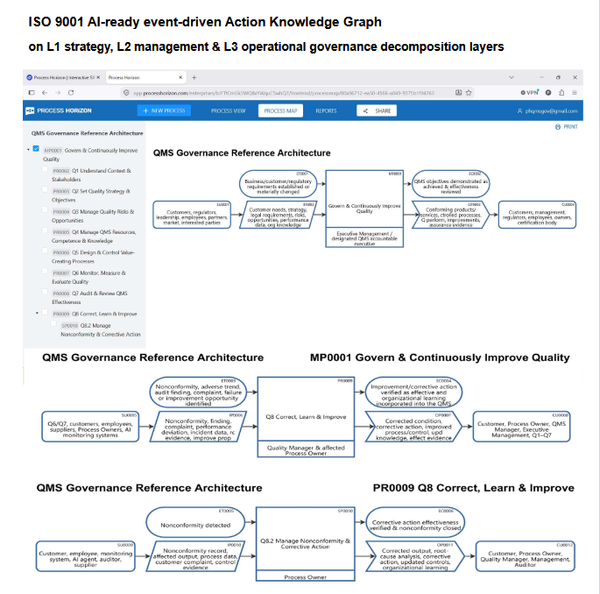
Using the following link you can access this sandbox SIPOC model in the ProcessHorizon web app and adapt it to your needs (easy customizing) and export or print the automagically created visual AllinOne SIPOC map as a PDF document or share it with your peers: https://app.processhorizon.com/enterprises/8QmMfdMPgdcM7uSDsdThmQ4V/frontend