Cost-effective healthcare process model

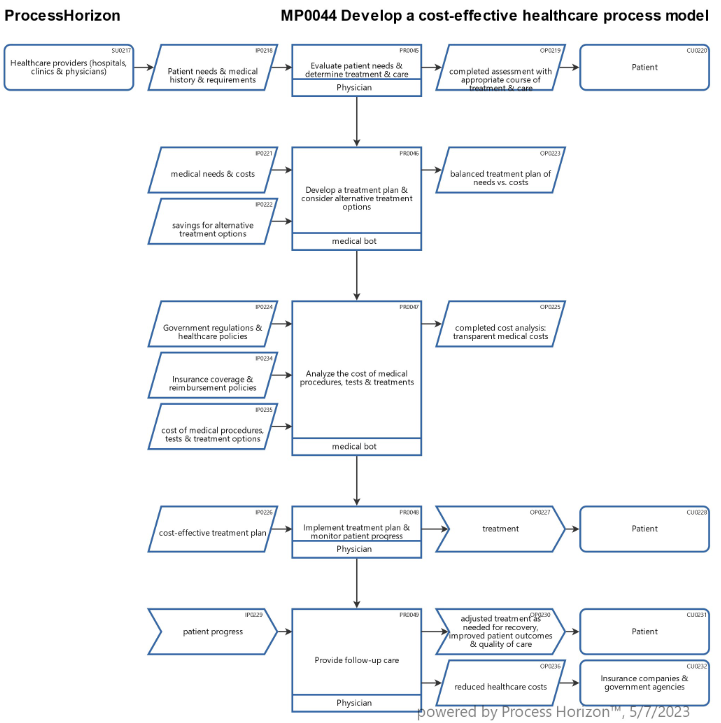
Cost-effective healthcare is critical for ensuring that everyone has access to the care they need, improving health outcomes, and promoting economic and social well-being as follows:
- Access: Cost-effective healthcare ensures that healthcare services are available and affordable to everyone, regardless of their financial situation. This means that people are more likely to seek medical attention when they need it, rather than delaying or avoiding care due to cost concerns.
- Better Health Outcomes: Cost-effective healthcarPe can help to improve health outcomes by ensuring that patients receive appropriate and timely care. This can help to prevent the progression of diseases and conditions, reducing the need for more costly treatments in the future.
- Economic Benefits: Cost-effective healthcare can also benefit the economy by reducing healthcare costs, which can free up resources for other areas of the economy. It can also reduce the financial burden on individuals, allowing them to spend more on other goods and services.
- Sustainability: Cost-effective healthcare is essential for the long-term sustainability of healthcare systems. By reducing costs and improving efficiency, healthcare systems can ensure that they are able to continue providing high-quality care to patients without going bankrupt.
Explore the smart ProcessHorizon web app https://processhorizon.com