AI project dimensions in a nutshell

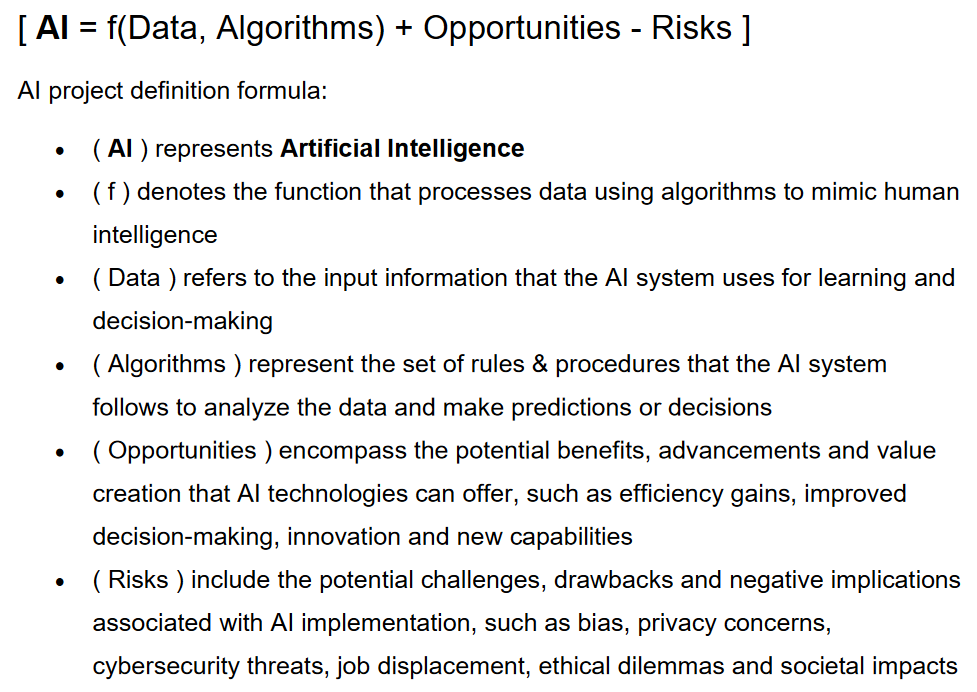
Opportunities & risks associated with AI projects arise from the project's process context and its impact on stakeholders.
1. Process Context
- Data Quality and Availability: The process context, including data sources, preprocessing methods, feature engineering and model selection, significantly impacts the quality and performance of AI algorithms.
- Algorithm Selection and Tuning: Decisions made during the algorithm selection, hyperparameter tuning and model evaluation stages influence the AI project's outcomes and effectiveness.
- Deployment and Integration: How the AI model is deployed, integrated into existing systems and maintained post-deployment can affect its scalability, reliability and adaptability.
2. Stakeholder Impact
- Ethical Considerations: Stakeholders' values, beliefs and concerns play a critical role in shaping the ethical guidelines and boundaries for AI projects.
- Bias and Fairness: Understanding stakeholder perspectives helps in identifying potential biases in data, algorithms or decision-making processes to ensure fairness and inclusivity.
- Transparency and Trust: Building trust with stakeholders through transparent communication, explainable AI and involving them in decision-making processes can enhance project acceptance and adoption.
In a healthcare AI project focused on disease prediction using patient data, the AI project formula can be applied as follows:
[ AI = f(Patient Data, Machine Learning Algorithms) + Healthcare Efficiency Opportunities - Data Privacy Risks ]
- Data: Patient data including medical history, symptoms, lab results and demographic information.
- Algorithms: Machine learning algorithms such as logistic regression, random forests or neural networks used for disease prediction.
- Opportunities: Utilizing AI for faster diagnosis, personalized treatment plans and proactive healthcare interventions to improve patient outcomes and reduce healthcare costs.
- Risks: Data privacy concerns related to the security and confidentiality of patient information, potential bias in AI models and ethical implications of algorithmic decision-making in healthcare.
Experience sophisticated simplicity for AI process context design: