Climate change governance process model

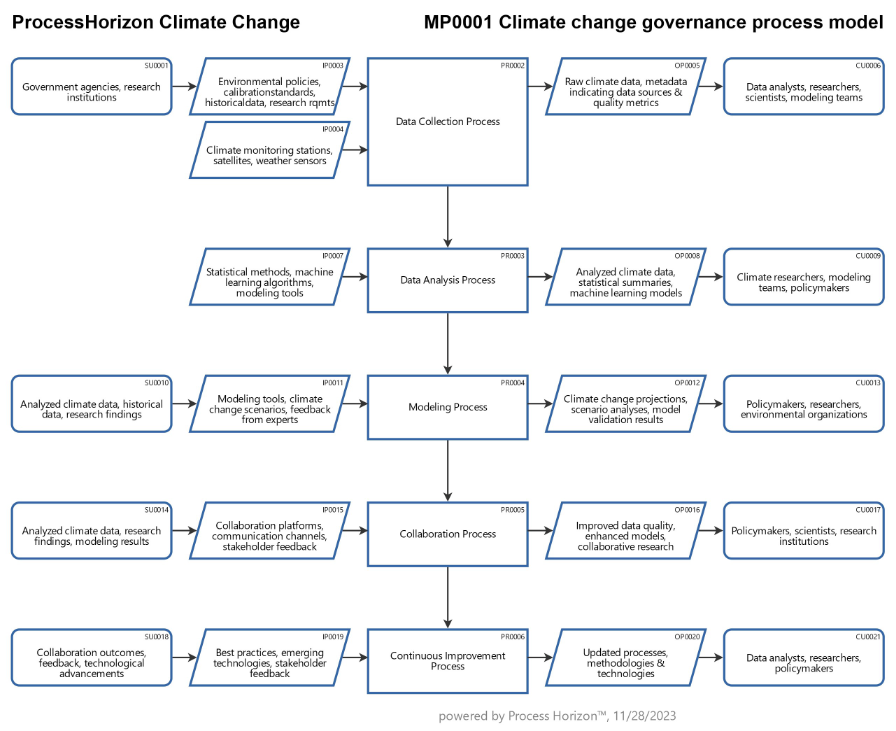
Effective climate governance requires collaboration and coordination among various actors such as United Nations, Government Agencies & Ministries as well as Non-Governmental Organizations (NGOs), Scientific Research & Advisory Bodies and Private Sector Engagement with an emphasis on transparency, accountability and the incorporation of the latest scientific knowledge into policy decisions.
1. Data Collection Process
Deploy sensors, collect real-time data, validate data quality, ensure compliance with standards.
2. Data Analysis Process
Clean and preprocess data, apply statistical analyses, conduct machine learning modeling.
3. Modeling Process
Develop cause and effect climate models, simulate future scenarios, integrate feedback.
4. Collaboration Process
Share data and findings, gather feedback, incorporate expert insights.
5. Continuous Improvement Process
Assess current processes, identify areas for improvement, implement changes.
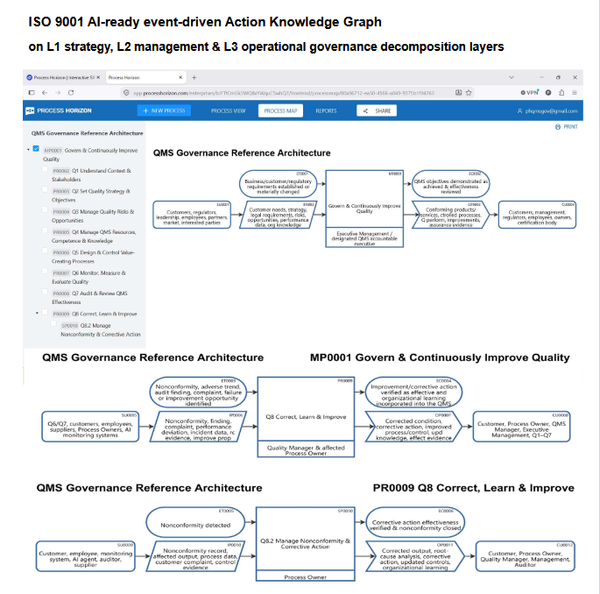
Using the following link you can access this sandbox process model in the ProcessHorizon web app and adapt it to your needs (easy customizing) and export or print the automatically created visual process map as a PDF document or share it with your peers: https://app.processhorizon.com/enterprises/r7jwLpisDYbzLRTpCvwJzpph/frontend