SIPOC methodology framework

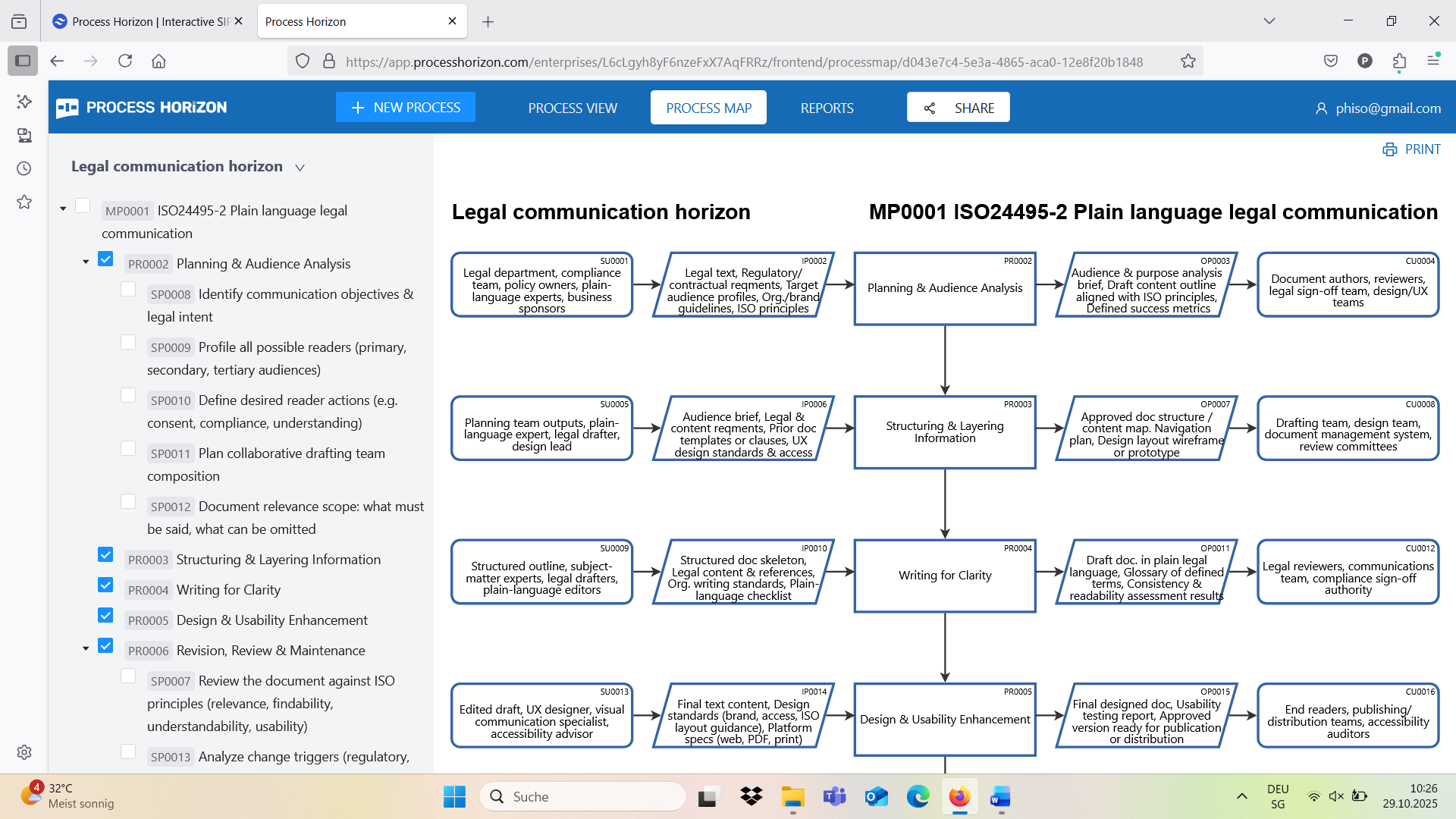
SIPOC can be conceived as a methodology & framework for process modeling & mapping because as a methodology, it provides a systematic approach to define and analyze any process by focusing on its boundaries, stakeholders and inputs & outputs. As a framework, it supports integration (linking multiple processes in a flow) and vertical decomposition (drilling down from high-level to detailed process levels). It thus ensures consistency, scalability & traceability across the organization’s entire process architecture.
SIPOC is a methodical, step-by-step way of designing, understanding & documenting processes end-to-end. As a methodology, SIPOC provides a structured logic for identifying & analyzing a process:
Suppliers: identify who provides the inputs (upstream dependencies) Inputs: define what resources, materials or data are needed Process: outline the transformation steps (value creation activities) Outputs: define what is produced (deliverables, results, products or services) Customers: identify who receives or uses the outputs (downstream dependencies)
Suppliers & Customers are stakeholders in the process. In the ProcessHorizon web app, the Process scope can be defined by events (start & end).
Beyond being a method, SIPOC acts as a framework because it can be applied recursively & hierarchically to model complex systems of processes.
Multi-Process flow model
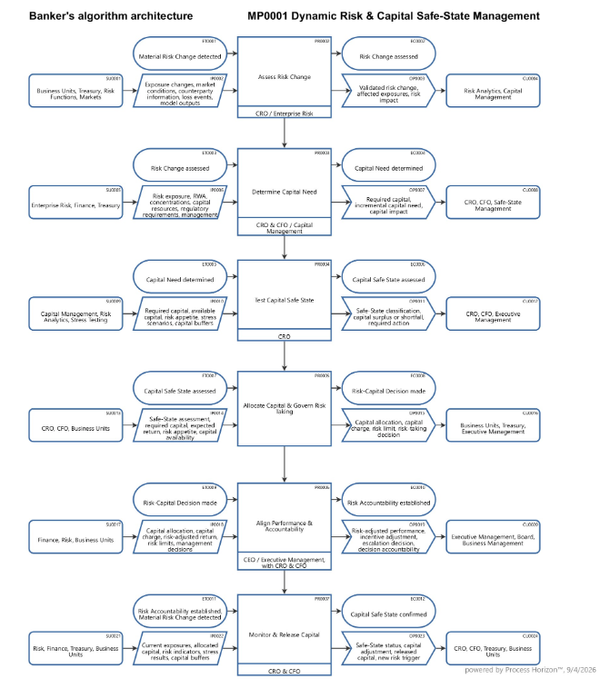
When applied to multiple processes, SIPOC enables end-to-end process flow modeling:
- The outputs of one SIPOC become the inputs of the next
- This provides transparency on the interconnections & dependencies across the value chain
- This allows organizations to map value streams and identify handoffs, redundancies or gaps between functions
Thus, SIPOC provides a framework for aligning multiple interconnected processes into a single coherent business process architecture.
Multi-Layer Decomposition
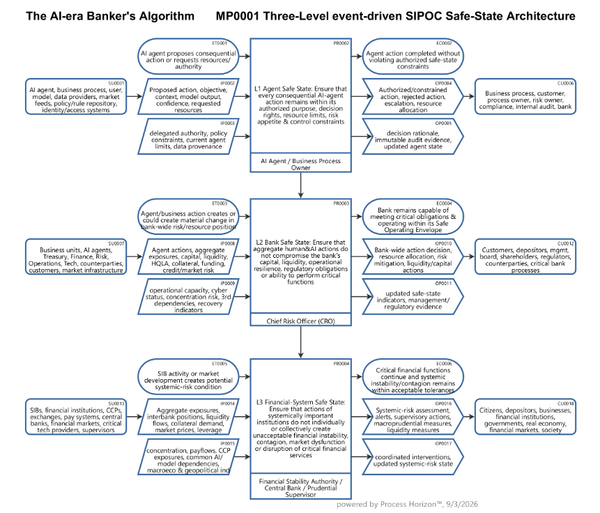
SIPOC can also be decomposed vertically to represent processes at different levels of granularity or process hierarchy:
- MP Level 1: Enterprise or strategy mainprocess-level SIPOC
- PR Level 2: Management functional process-level SIPOC
- SP Level 3: Subprocess operational subprocess-level SIPOC (activities)
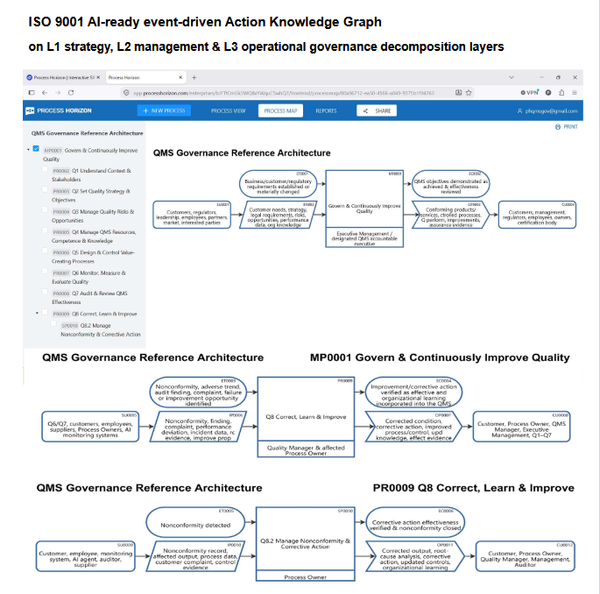
At each level, the Process box of the higher-level SIPOC can be expanded into another SIPOC, showing increasing levels of detail.
This recursive characteristic makes SIPOC a framework for process decomposition, similar to how systems engineering uses top-down functional decomposition.
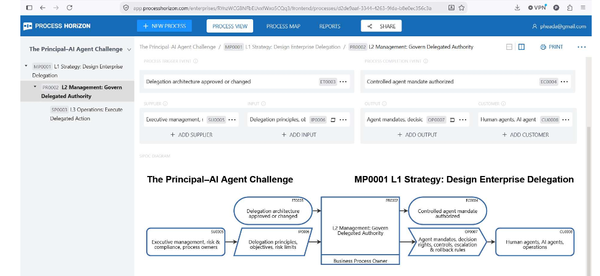
The process map example provided, shows the process model decomposition in the navigation bar (MP>PR>SP layer) and the SIPOC end-to-end process flow definition in the process map view.
In my next blog, I will explain the power and versatility of SIPOC as a master algorithm for AI and the economy.