Multi-Layer event-driven Action & Decision model

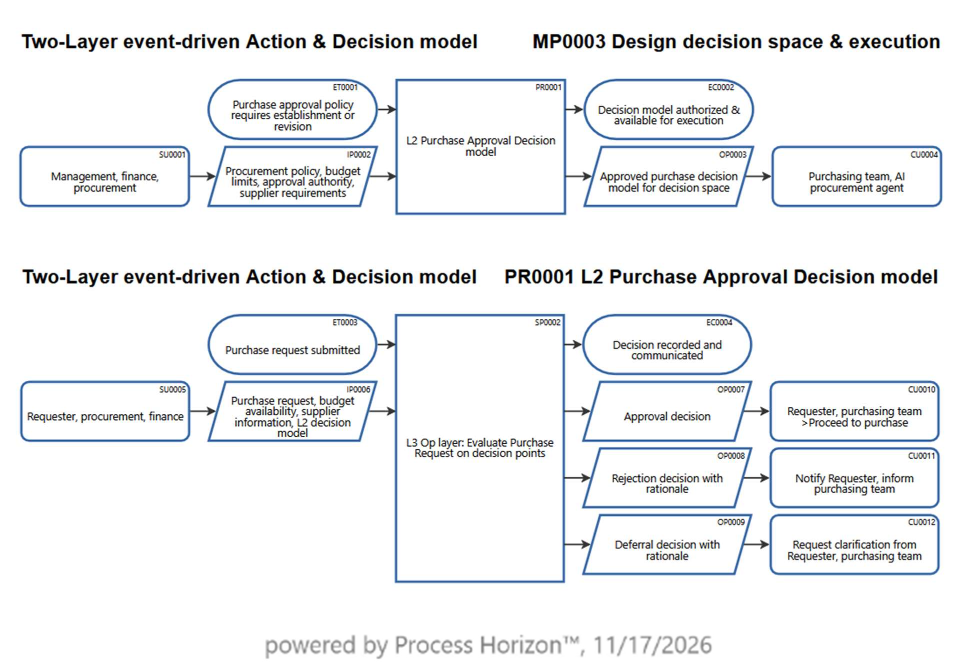
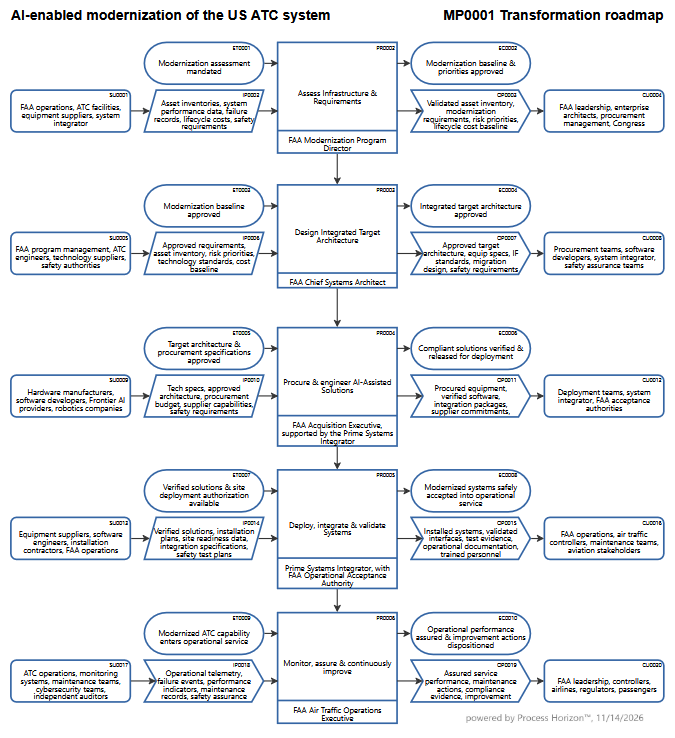
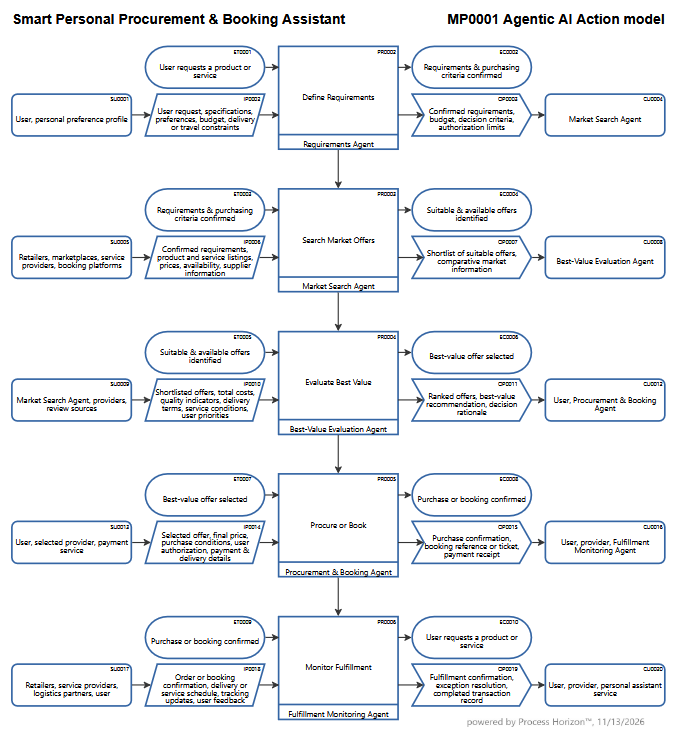
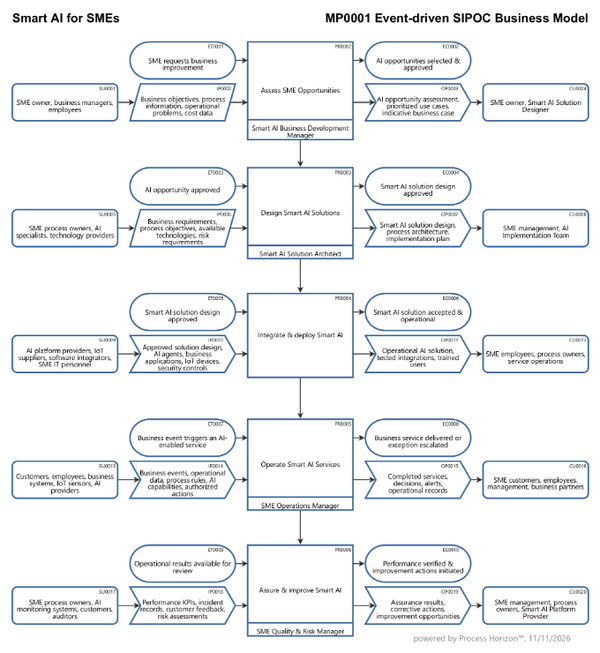
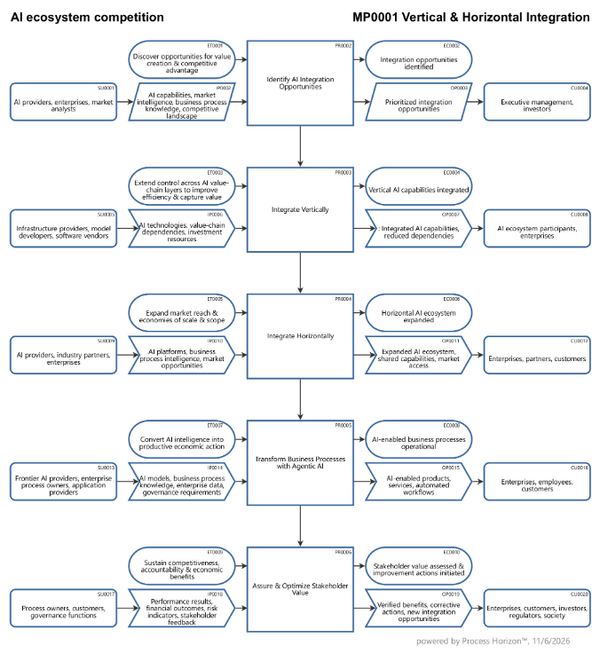
The event-driven SIPOC multi-layer modeling methodology propagated by ProcessHorizon extends to an integrated Enterprise Action & Decision Architecture for Human & Agentic AI.
The two-layer architecture differentiates between Decision Space Design (L2 Management) and Decision Point Execution (L3 Operations) which provides a natural separation between human governance and Agentic AI autonomy.
L2 Management Layer: Design & govern the Decision Space
Manage Purchase Approval Decision Model Establish & maintain the decision rules, choices & authority for purchase approvals.
For this example, there are three possible completion outcomes for the operational decision process. They are defined and governed at L2, but selected at L3.
L3 Operational Layer: Execute the decision points & action the outcomes
Execute Purchase Approval Decision Evaluate Purchase Request with the objective to evaluate an individual purchase request against the approved decision model & determine its outcome.
L3 Operational Decision Points
Start Event: Purchase Request Received
Decision Point 1 Is the request complete & authorized ?
Decision Point 2 Does the request meet budget & policy requirements ?
Apply L2 Decision Model Determine the applicable outcome.
Decision Points identify where choices are made, while Control Points verify whether the decision respects authority, policy and risk constraints.
Every decision is an action outcome & every decision outcome can become an event triggering further action.
Event-driven SIPOC value chain
StartEvent v Suppliers >Inputs >PROCESS >Outputs >Customers v EndEvent
Using the following link you can access this sandbox model in the ProcessHorizon web app and adapt it to your needs (easy customizing) and export or print the automagically created visual AllinOne event-driven SIPOC map as a PDF document or share it with your peers: https://app.processhorizon.com/enterprises/qAn7w8n2UvA33PPaviaCueyi/frontend