Political governance & leadership framework

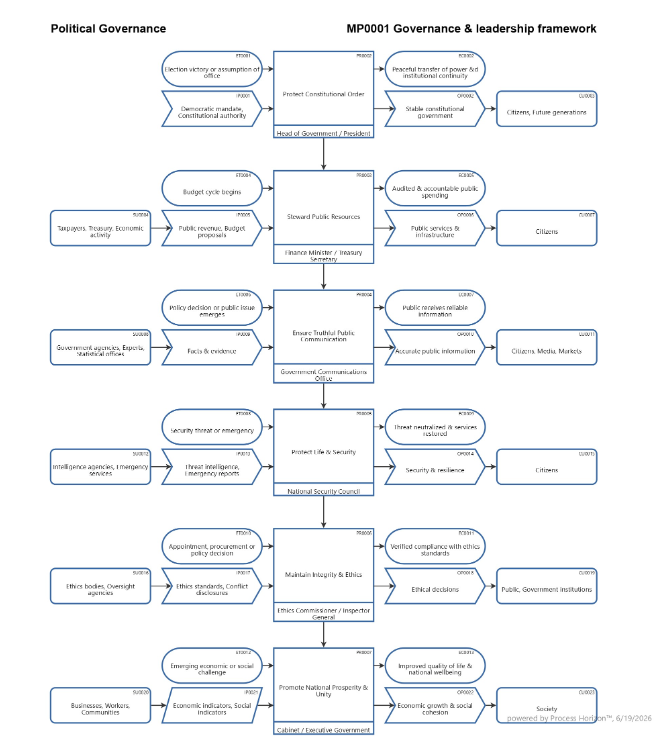
The Ten Commandments can be viewed as a governance architecture built around three overarching objectives:
- Integrity: avoid corruption, deception & abuse of power
- Stewardship: protect people, institutions & public resources
- Accountability: ensure leaders remain subject to law, truth & ethical constraints
In modern governance terms, these principles align closely with the factors measured by the World Justice Project Rule of Law framework: constraints on government powers, absence of corruption, open government, fundamental rights, order & security, regulatory enforcement, and civil justice. A politician could be assessed against such principles regardless of party affiliation, ideology, or country.
1: Protect Constitutional Order Uphold rule of law, Respect separation of powers, Protect institutional independence
2: Steward Public Resources Allocate resources, Monitor expenditures, Prevent misuse
3: Ensure Truthful Public Communication Verify information, Communicate transparently, Correct errors
4: Protect Life & Security Assess risks, Deploy resources, Protect population
5: Maintain Integrity & Ethics Review conflicts, Apply controls, Investigate allegations
6: Promote National Prosperity & Unity Formulate policy, Engage stakeholders, Implement reforms
Oath of office of POTUS: "I do solemnly swear (or affirm) that I will faithfully execute the Office of President of the United States, and will to the best of my ability, preserve, protect and defend the Constitution of the United States."
Using the following link you can access this sandbox SIPOC model in the ProcessHorizon web app and adapt it to your needs (easy customizing) and export or print the automagically created visual AllinOne SIPOC map as a PDF document or share it with your peers: https://app.processhorizon.com/enterprises/174bhz8sRMVw3vixvarwY8gR/frontend