Internet Access Options

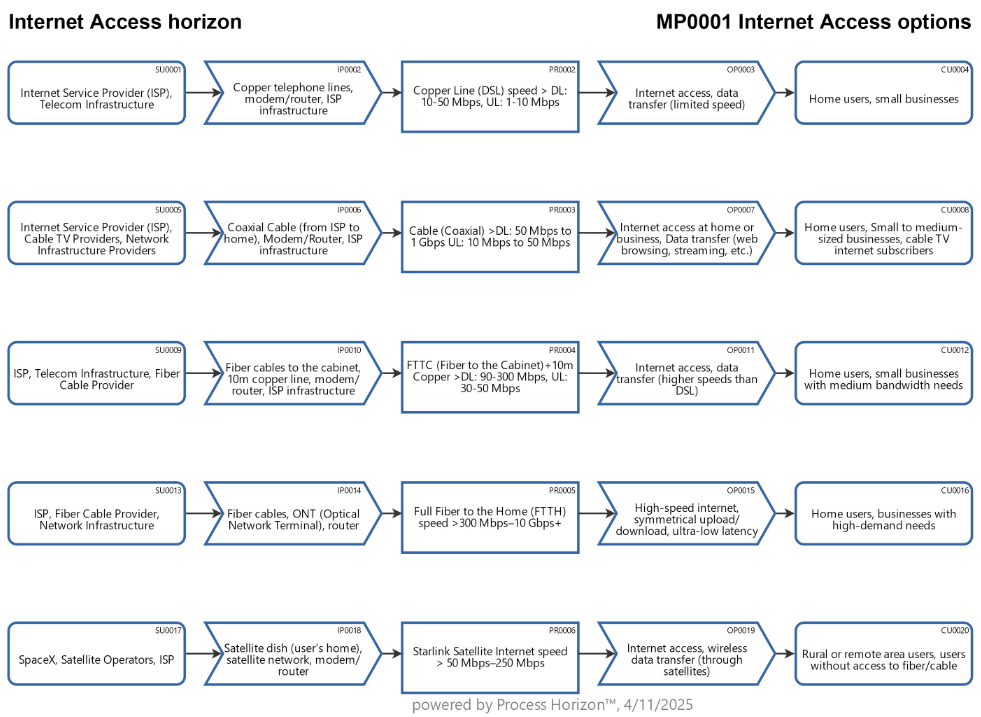
The main Internet Access options for home use are as follows:
- Copper DSL is the most limited in terms of performance, particularly for high-demand tasks like streaming or gaming. Key performance metrics: Download: 10-50 Mbps, Upload: 1-10 Mbps, Latency: 30-60 ms, Stability: Low, Future-Proofing: Poor
- Cable (Coaxial) Internet Access involves the delivery of internet service through coaxial cable networks, typically provided by ISPs and cable TV providers and offers relatively high-speed internet access. Key performance metrics: Download speed: 50 Mbps to 1 Gbps, Upload speed: 10 Mbps to 50 Mbps, Latency: 10–30 ms, Stability: Generally high, with occasional outages due to external interference, Future-Proofing: Moderate (good speed, but limited by coaxial technology and network capacity)
- FTTC (Fiber to the Cabinet) + 10m Copper provides much better performance than copper alone, especially with fast downloads and decent uploads, but it’s still limited compared to Full Fiber. Key performance metrics: Download: 90-300 Mbps, Upload: 30-50 Mbps, Latency: 10-20 ms, Stability: High, Future-Proofing: Limited
- Full Fiber is the top choice for maximum speed, low latency, and future-proofing, ideal for anyone with high-demand internet needs. Key performance metrics: Download: 300 Mbps–10+ Gbps, Upload: Symmetrical, Latency: 1-10 ms, Stability: Very High, Future-Proofing: Excellent
- Starlink is a great option for rural areas, offering decent speeds and reliability for users without access to cable or fiber, but with some weather-related instability. Key performance metrics: Download: 50-250 Mbps, Upload: 10-50 Mbps, Latency: 20-50 ms, Stability: Moderate (weather-dependent), Future-Proofing: Improving, but not as good as fiber
- Mobile (4G/5G) Cellular network data (via mobile phone or hotspot) for mobile users, On-the-Go Key performance metrics: 10 Mbps–1 Gbps