Why is eSIPOC the missing simplicity layer in AI ?

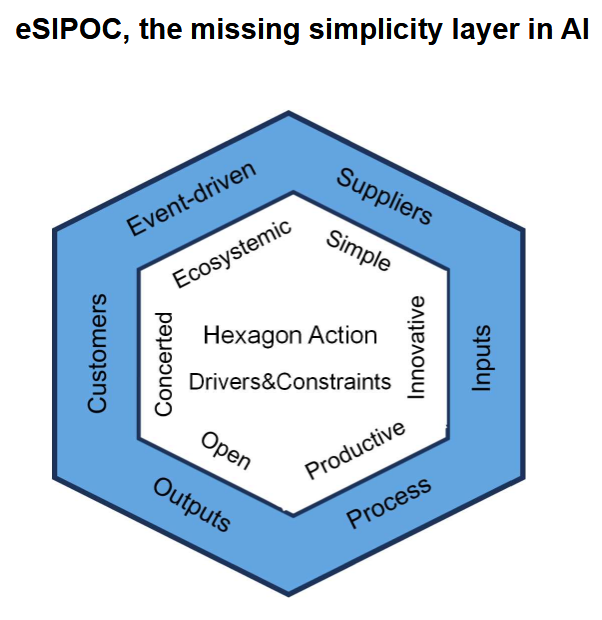
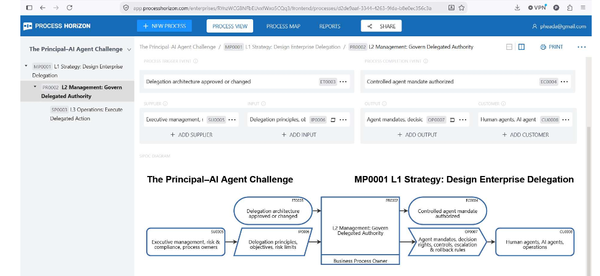
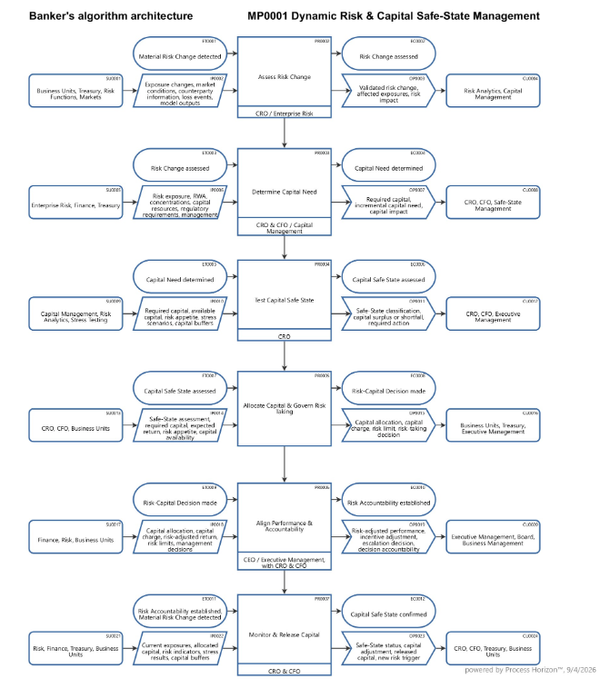
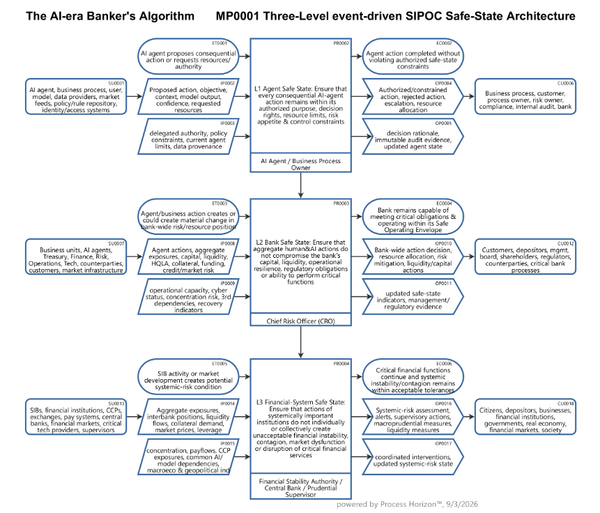
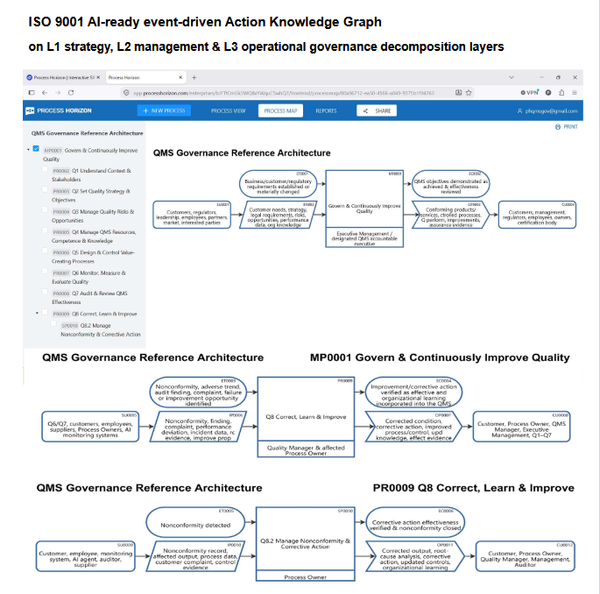
eSIPOC, i.e. event-driven(Suppliers> Inputs> PROCESS> Outputs> Customers) is about structural simplicity projecting a universal interface between humans, agents & systems.
Hexagon Action Drivers & Constraints
Ecosystemic > interconnectedness & interdependence of all its parts & processes
Simple > execution clarity: how action remains understandable
Innovative > process evolution: how action adapts and improves
Productive > outcome efficiency: does this create real value ?
Open > process composability: how action remains extensible
Concerted > orchestration: how action fits the system
The eSIPOC hexagon succeeds where fragmented complexity models fail because it constrains action holistically rather than managing complexity piecemeal.
The stakeholder-oriented all-in-one process & data modeling methodology enables Agentic AI througout its lifecylce from design orchestration, implementation to post deployment.
Saint-Exupéry "Perfection is achieved, not when there is nothing more to add, but when there is nothing left to take away".
> Less is more.
The ProcessHorizon web app is purpose-built for holistic end-to-end process & data (unified) modeling & mapping ideally suited to AgenticAI.
Sophisticated simplicity is the app’s architecture hallmark. Keep it simple for max clarity & understanding.