AI governance operating system from principle to process

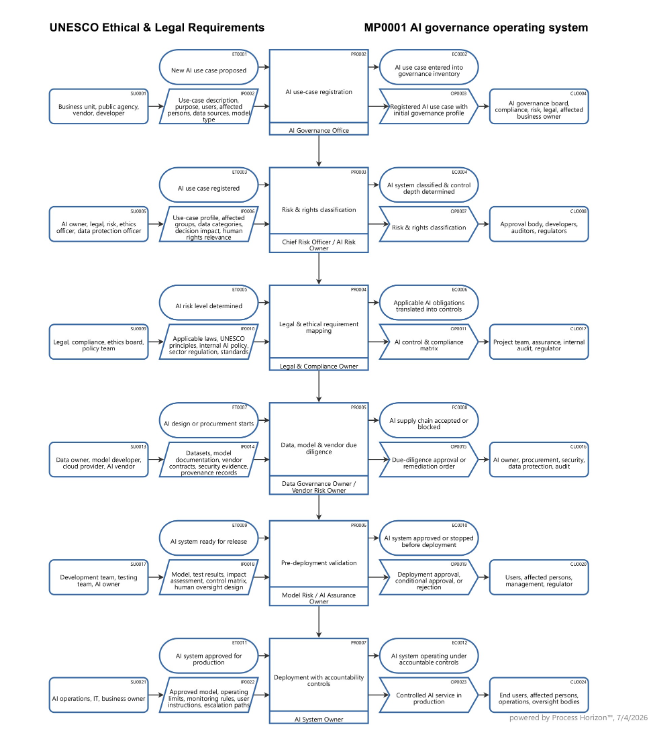
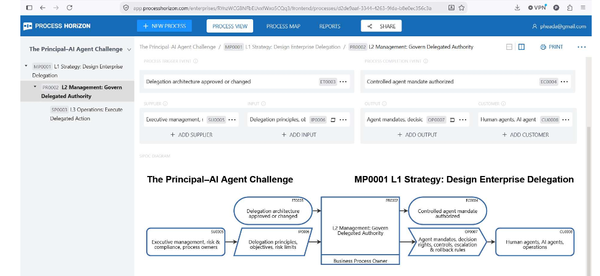
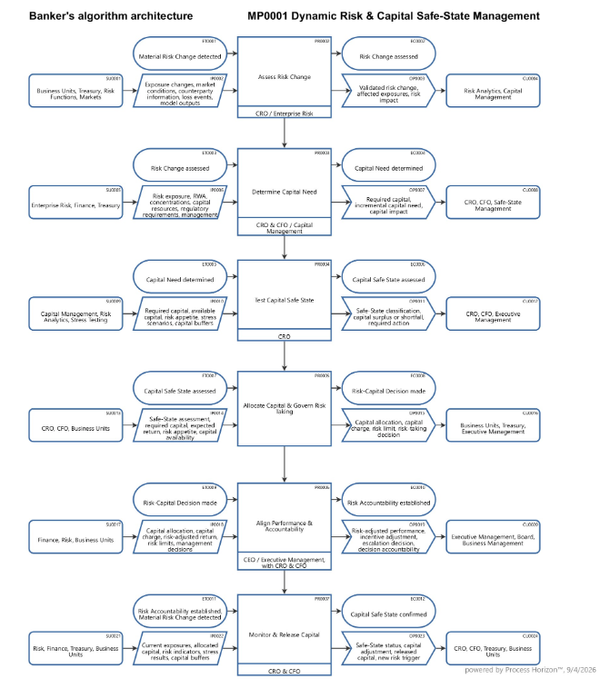
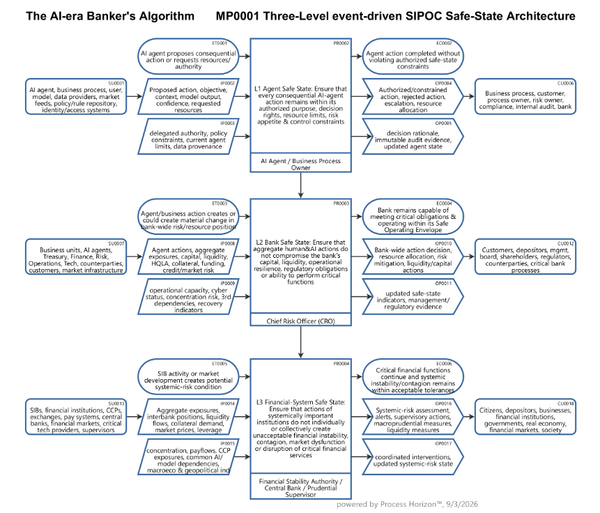
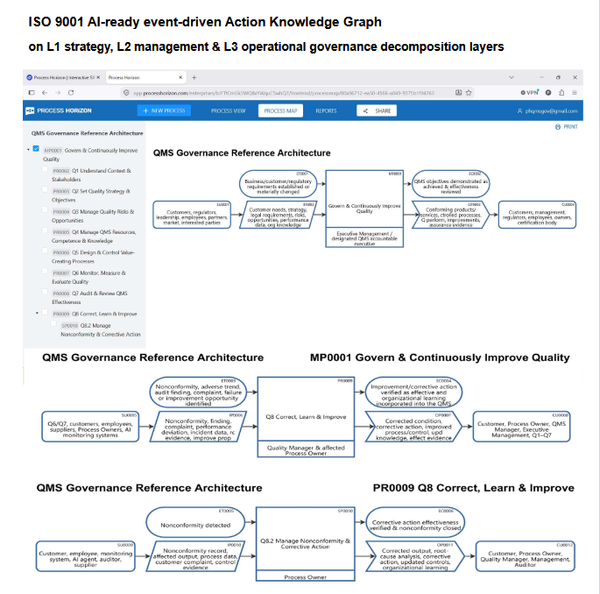
An event-driven SIPOC architecture can complement the UNESCO AI Governance framework by supplying a common operational language for translating legal & ethical requirements into accountable, auditable & continuously improvable governance processes.
UNESCO provides the governance logic. Event-driven SIPOC stages the execution logic.
1 AI use-case registration
Classify AI system, identify legal basis, map stakeholders, assign owner.
2 Risk & rights classification
Assess risk level, rights impact, discrimination exposure, safety exposure, vulnerability of affected groups.
3 Legal & ethical requirement mapping
Map obligations to controls, documentation, approvals, disclosures, testing requirements.
4 Data, model & vendor due diligence
Check data quality, bias risk, IP rights, privacy, cybersecurity, model limitations, vendor accountability.
5 Pre-deployment validation
Validate accuracy, robustness, explainability, bias, security, human override, fallback procedures.
6 Deployment with accountability controls
Deploy within approved scope, activate monitoring, log decisions, assign human oversight.
7 Transparency & disclosure
Generate notices, explainability material, user guidance, public register entries.
8 Incident, complaint & redress handling
Investigate, suspend if needed, determine root cause, correct harm, update controls.
9 Continuous monitoring & improvement
Review performance, reassess risk, update controls, retrain or retire system.
Event-driven SIPOC turns AI governance from a declaration system into an action system.
Using the following link you can access this sandbox SIPOC model in the ProcessHorizon web app and adapt it to your needs (easy customizing) and export or print the automagically created visual AllinOne SIPOC map as a PDF document or share it with your peers: https://app.processhorizon.com/enterprises/FMQXb4TfBbwmEE1B22aNShEY/frontend