AI-driven banking ecosystem

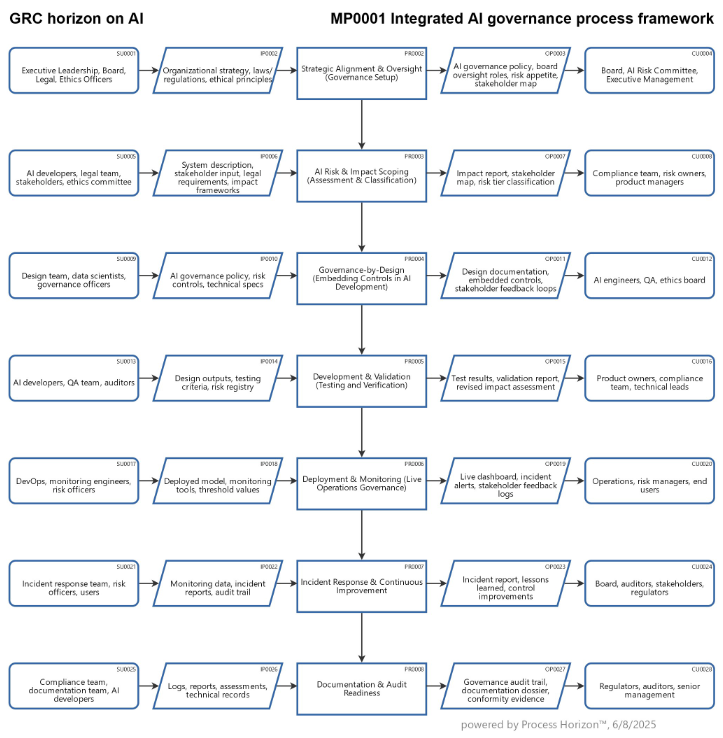
The key challenge for banking with Agentic AI is ensuring that autonomous decision-making systems act transparently, ethically, and in alignment with regulatory and risk-management frameworks in a highly complex and regulated environment.
The market risks of an AI-driven banking ecosystem include model-driven volatility, systemic errors from correlated AI behaviors, lack of transparency in automated decisions, and rapid amplification of market shocks.
My blogs, supported by comprehensive end-to-end SIPOC process maps, advocate for a participatory, stakeholder-oriented AI modeling approach that ensures transparency, alignment, and practical relevance in banking innovation.
Below is a categorized breakdown of my past three year's blogs for banking:
1. Risk Management & Resilience
- Manage risks at a commercial bank
Scope: Enterprise-wide risk practices (credit, market, operational).
Message: Frameworks for identifying, assessing, and mitigating banking risks. - Manage VaR process at a commercial bank
Scope: Quantitative risk measurement.
Message: Implementing Value at Risk models for market exposure management. - Manage liquidity & bankruptcy risks of a commercial bank 1/2 & 2/2
Scope: Liquidity risk, solvency strategies.
Message: Techniques and stress scenarios for surviving liquidity crises. - How to manage value chain risks at Financial Institutions?
Scope: Vendor, operational, and systemic risks across financial value chains.
Message: Strategic risk mapping and mitigation in extended ecosystems. - Supervisory Stress Testing for systemically important banks
Scope: Regulatory simulations.
Message: Ensuring resilience of large banks under extreme conditions.
2. Mergers, Takeovers, and Asset Strategy
- Manage M&A Due Diligence for a big bank takeover
Scope: Legal, financial, operational due diligence.
Message: Best practices in evaluating large-scale acquisition targets. - Retail banking merger
Scope: Post-merger integration challenges.
Message: Strategic considerations in consolidating retail banking units. - Asset management process
Scope: Investment and portfolio management.
Message: Structuring, monitoring, and optimizing bank asset portfolios.
3. Regulation, Governance, and Compliance
- Promoting a safe & stable banking system through effective regulation & supervision
Scope: Macroeconomic regulatory frameworks.
Message: Role of regulation in financial system stability. - Bank rating process
Scope: Creditworthiness evaluation.
Message: How agencies and internal models assess bank ratings. - GRC perspective for the banking industry
Scope: Governance, Risk, and Compliance integration.
Message: Unified approach to policy adherence and control mechanisms. - AI empowered SOX process model for banking supervision
Scope: AI in Sarbanes-Oxley compliance.
Message: Automating internal controls testing and reporting.
4. Automation & AI in Banking
- Conceivable automation of banking processes by AI
Scope: AI-based workflow transformation.
Message: Opportunities and boundaries of AI process automation. - Real-time monitoring of transactional data for AI-driven banks
Scope: Continuous data analytics.
Message: Enhancing fraud detection, compliance, and insights via AI. - Anomaly Detection in Financial Transactions by AI ML
Scope: Machine learning for anomaly detection.
Message: Identifying irregular financial activities using ML. - Credit scoring agent
Scope: AI-based creditworthiness evaluation.
Message: How intelligent agents revolutionize scoring systems. - AI application risks in banking
Scope: Tech-related operational risks.
Message: Bias, black-box models, explainability challenges. - How to mitigate asymmetries in AI banking?
Scope: Transparency, fairness, and access in AI systems.
Message: Reducing information imbalance and ethical gaps. - Financial industry risk-return management by AI Agents
Scope: Algorithmic portfolio/risk management.
Message: Optimizing investment decisions using intelligent systems.
5. Digital Ecosystems & Transformation
- eBill: the digital invoice & payment process
Scope: Fintech integration in B2B payments.
Message: Digitizing and streamlining invoicing workflows. - Engaging a big bank's ecosystem
Scope: Partnering with fintechs, clients, regulators.
Message: Building a collaborative digital banking environment. - What data might be hidden in a bank's digital ecosystem?
Scope: Unstructured/latent data discovery.
Message: Unlocking hidden insights from overlooked data pools.
6. Process Maturity & Operational Management
- Appraise maturity of vital Banking Processes
Scope: Business process evaluation.
Message: Using maturity models to enhance banking efficiency. - How to run a bank as a going concern?
Scope: Operational sustainability.
Message: Ensuring long-term viability through sound practices.
7. Financial Innovation & Strategy
- Sustainable banking business model processes
Scope: ESG & sustainable finance.
Message: Integrating sustainability into banking operations. - Financial Engineering Horizon
Scope: Innovative financial instruments & models.
Message: Exploring the future of quantitative banking tools. - Navigating a bank's stakeholder dilemma
Scope: Balancing interests (shareholders, clients, regulators).
Message: Resolving competing priorities in strategic planning. - Opportunities & risks of a Wealth Management Robo-Advisor system
Scope: Automated investment advisory.
Message: Benefits and pitfalls of digital wealth solutions.
8. Compensation & Incentives
- Risk-adjusted compensation framework for bankers
Scope: Performance-linked pay.
Message: Aligning incentives with long-term, risk-aware behavior.