The recruitment process 2/2

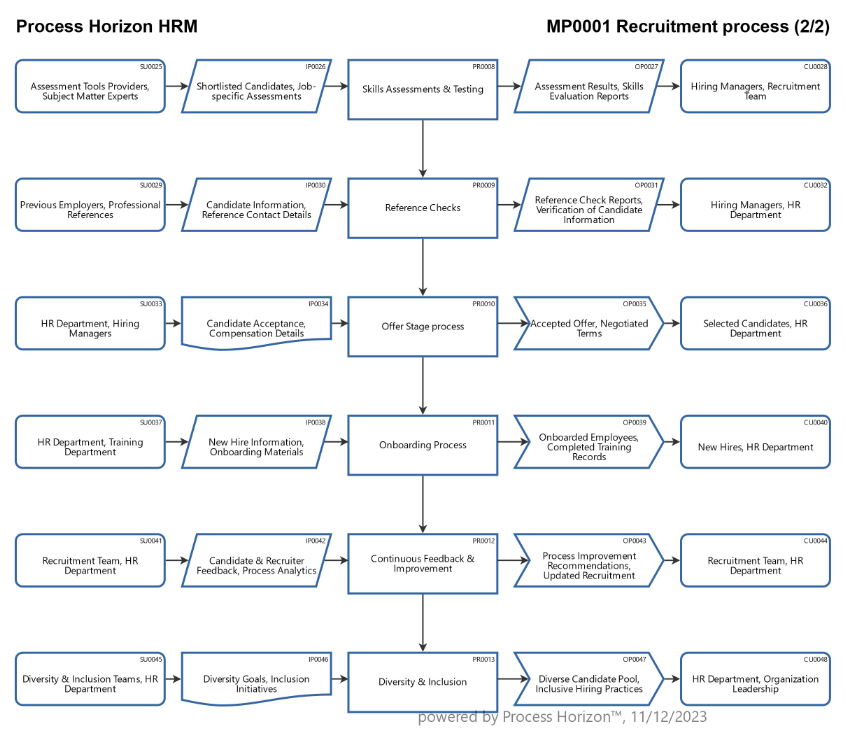
A best-in-class recruitment process is crucial for attracting top talent to your organization. It involves a series of well-defined steps and strategies designed to identify, attract, and hire the most qualified candidates.
7. Skills Assessments and Testing
- Administer technical assessments, skills tests, or job-related tasks to evaluate candidates' abilities.
- Use assessment tools tailored to the specific job role.
8. Reference Checks
- Verify candidates' work history, skills, and qualifications through thorough reference checks.
- Contact previous employers or colleagues to gain insights into the candidate's work ethic and abilities.
9. Offer Stage
- Present a competitive and attractive job offer, including salary, benefits, and other perks.
- Be prepared to negotiate terms to accommodate both the company and the candidate's needs.
10. Onboarding Process
- Develop a comprehensive onboarding program to integrate new hires into the company culture and their roles.
- Provide necessary training, introductions to team members, and resources to set them up for success.
11. Continuous Feedback and Improvement
- Gather feedback from both recruiters and candidates about the recruitment process.
- Analyze data to identify bottlenecks and areas for improvement, and make necessary adjustments to enhance the process continuously.
12. Diversity and Inclusion
- Actively promote diversity and inclusion throughout the recruitment process.
- Implement strategies to attract candidates from diverse backgrounds and ensure unbiased hiring decisions.
Explore the smart ProcessHorizon web app for holistic automated process & data mapping AllinONE: https://processhorizon.com