Process Horizon SIPOC process modeling methodology

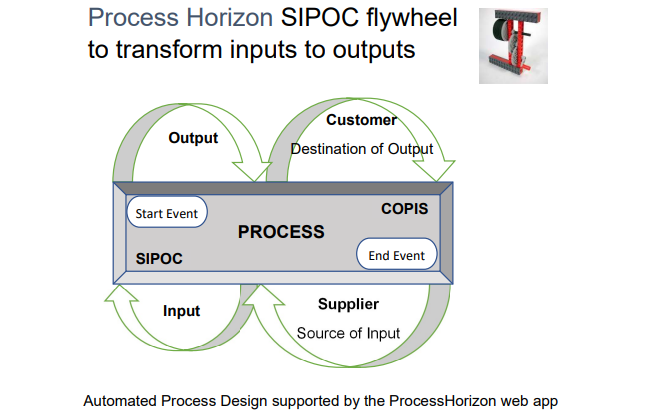
Processify your life & work using the SIPOC flywheel to transform inputs to outputs powered by an Automated Process Design Engine.
i-fy > interactive interconnected integrated informative intelligent inventive innovative iterative process modeling
I-notions > Impulse Inspiration Imagination Ingenuity Induction Illumination Ideation Information Investigation Instruction Interaction Interdependence Interconnection Inference Improvement Innovation Incubation Instantiation Integration Implementation Incorporation, etc. promoted by SIPOC based process modeling
IoP > Internet of Processes to leverage Internet of Things (IoT) & data as an asset
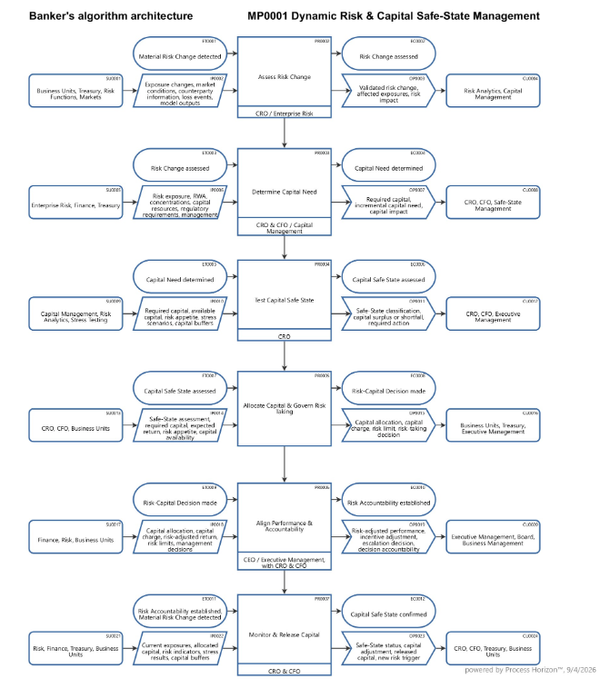
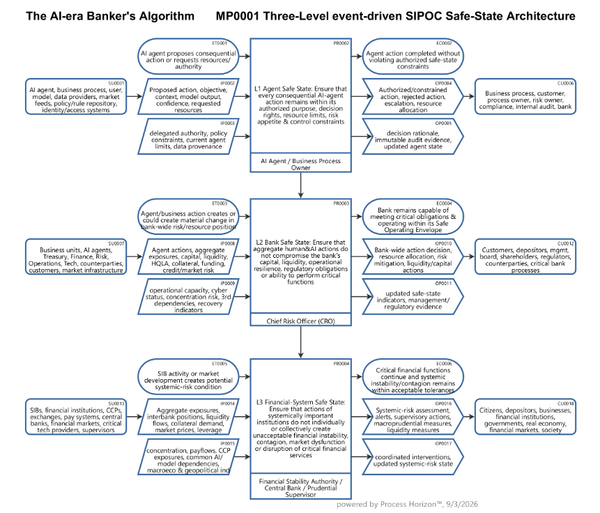
SIPOC notation: Supplier > Input > PROCESS > Output > Customer
Events start and end a process and can be used to model an event-driven process chain.
The SIPOC methodology is propagated by the process-based ISO9001 QMS standard and is also adopted as COPIS tool approach for Six Sigma projects.
Build your 3D process model like a lego house layer by layer & end-to-end.
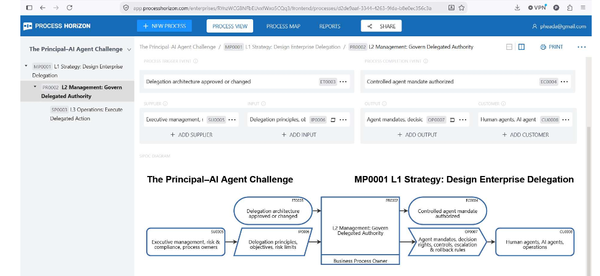
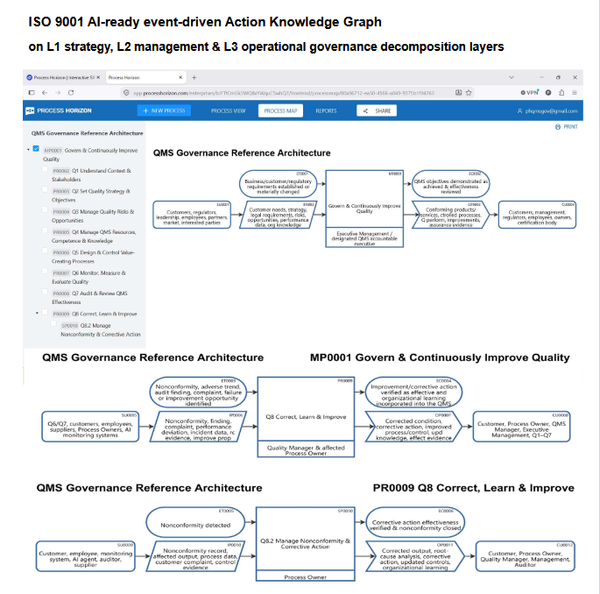
Explore the smart interactive Process Horizon web app for automated multilayer end-to-end process modeling with a dynamic process navigation dashboard.
Scamper & instantly create your own visual auto generated Process Map step by step to best practice.
Free hands-on trial: https://processhorizon.com
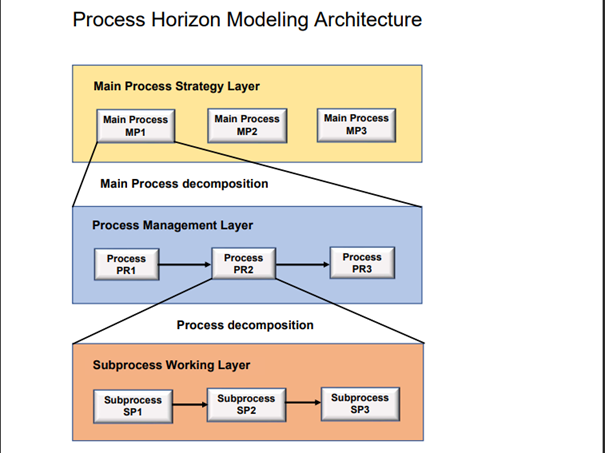
The SIPOC based automated process modeling architecture is supported over three process level layers.